The Map Is Not Sacred
The illustrated Florida extension is a hypothesis, not a design. This chapter separates the ability to alter a coast from the evidence required to decide whether doing so is sensible.
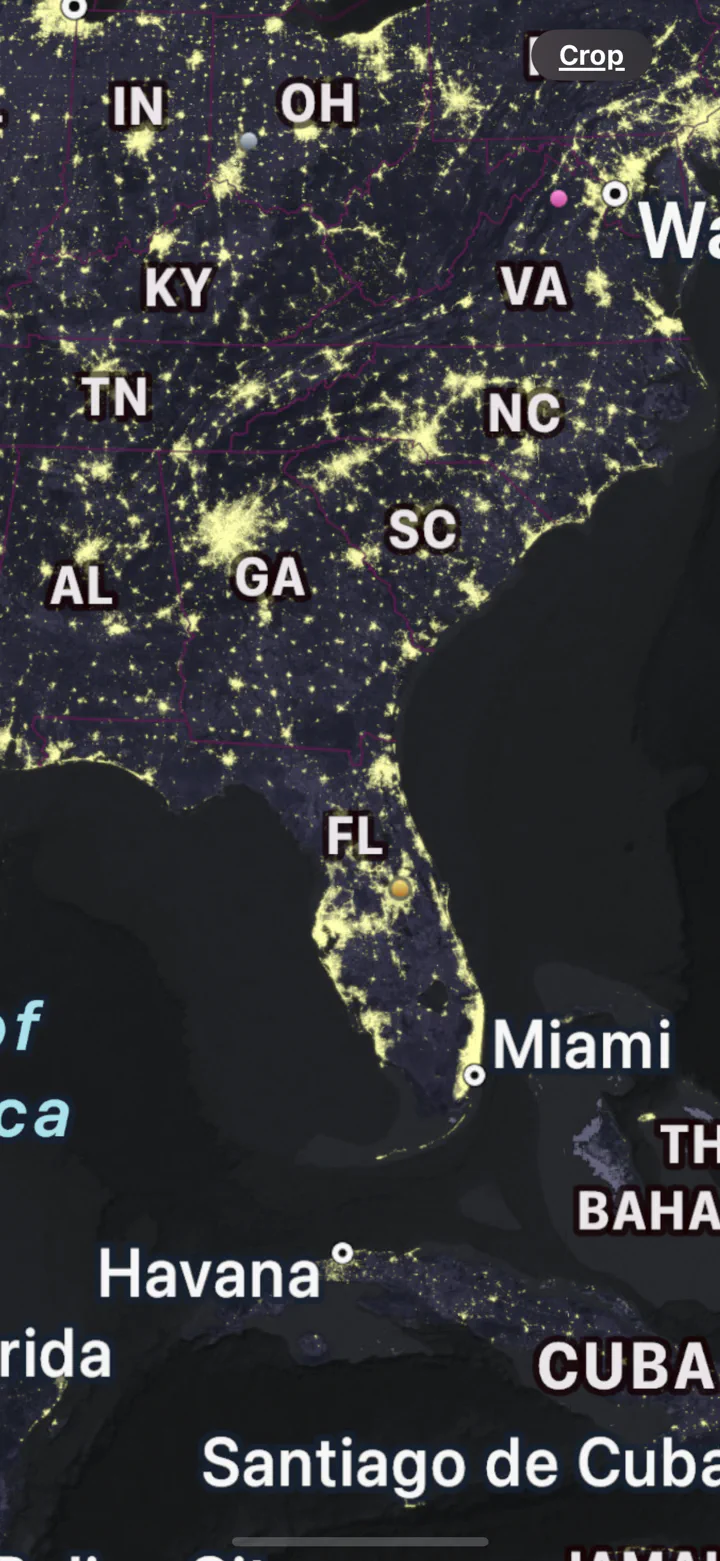
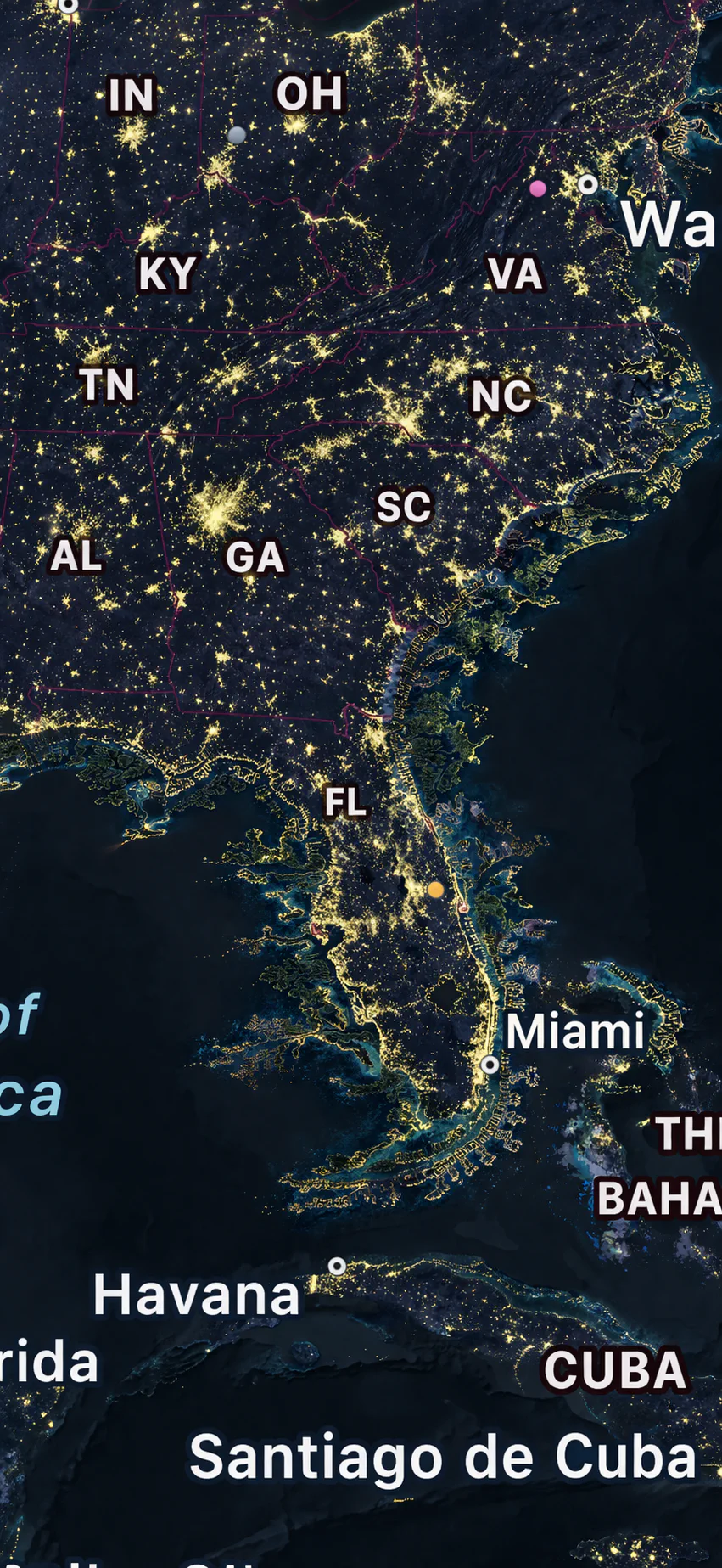
The extended-Florida image resolves its outer edge into a clean, continuous line. The evidence needed to support that line has yet to be assembled.
No bathymetric survey defines the footprint. No boreholes establish what lies beneath the seabed. No sediment investigation identifies a compatible source. No wave, surge, inlet, navigation, or ecological model tests the geometry. The drawing earns its place by making a question visible. It is not a design.
A map can rearrange land and water without showing whether the result will remain stable, improve safety, clear permitting, attract users, or justify its cost. Coastlines move, but every reach carries a physical history, a living system, and public claims that constrain what can responsibly replace it.
The coast already moves
A shoreline is a temporary boundary produced by sediment, water level, waves, currents, storms, geology, and human work. Its position changes even when no one intends to move it. Beaches narrow and widen. Inlets migrate. Deltas grow or retreat. Barrier islands roll landward or break under storms.
People add another set of forces. Navigation channels interrupt shoals. Jetties redirect sediment. Beach nourishment replaces eroded sand. Causeways alter water exchange. Ports create filled land and hardened basins. Flood projects raise grades or place new defenses. The US Army Corps of Engineers Coastal Engineering Manual treats these interventions as part of ordinary coastal engineering because there is no untouched reference condition to which a developed coast can simply return.
Each intervention creates a different bargain. Periodic nourishment, a raised neighborhood, an offshore breakwater, and a new industrial island move different quantities of material, disturb different habitats, fail in different ways, and commit someone to different forms of maintenance.
The decision turns on the proposed change, the purpose it serves, and the responsibilities that begin once it is built.
Capability is the lowest bar
The international record establishes physical capability; transferability still has to be earned site by site.
Machines execute choices rather than make them. A dredger can place unsuitable sand as efficiently as suitable sand. Ground improvement can reduce some settlement risks while deep regional subsidence continues. A seawall can survive its design waves and intensify damaging currents at a nearby inlet. A barrier can calm the water behind it and create a navigation or drainage problem at the same time.
Engineering begins after the statement “this can be built.” A proposal must show why the method belongs here, what useful work it performs, and who can operate it for as long as its consequences persist.
Florida contains several coastal systems: Atlantic beaches, Gulf estuaries, tidal inlets, the carbonate setting of the Keys, and developed port entrances. Their sediment supplies, seabed profiles, wave climates, and habitats can diverge over short distances. A concept that performs well on one reach can create erosion, shoaling, or water-quality problems on the next. Any statewide outline conceals the first decision: which exact reach should change, and why there?
What the line leaves out
Purpose comes first because use determines geometry. Port land needs navigable access, road and rail connections, utilities, tenants, and an operator. Housing needs safe access, public services, insurable structures, and a credible evacuation plan. A flood project needs a defined protection objective and an account of the water displaced or redirected. An industrial quay, a beach, a surge barrier, and a habitat island should begin from different outlines.
Then comes material. Fill must match the receiving site in grain size, mineral composition, contamination status, shell content, and behavior under waves. Offshore sand on the federal Outer Continental Shelf is managed through the Bureau of Ocean Energy Management’s Marine Minerals Program. Extraction reshapes seabed topography and benthic habitat, adds vessel traffic, and can alter local currents.
The source is part of the project.
A thick fill platform loads soils that may compress unevenly for years. Shallow treatment leaves deep-soil behavior to be resolved separately. A credible concept needs borings, laboratory testing, consolidation estimates, liquefaction screening where relevant, and a plan for differential movement. Finished elevation must account for construction settlement, long-term settlement, regional land movement, water-level change, and the freeboard required for the intended use.
Water reacts to every new edge: wave transformation, tidal exchange, storm flow, and sediment transport shift together. Modeling must extend across the affected system. An offshore barrier may reduce ordinary wave energy along one shoreline while focusing currents at its ends, altering inlet shoals, complicating navigation, or slowing surge drainage. Protection and safe-harbor claims remain provisional until those interactions are tested.
The living system adds its own boundaries. Turbidity can shade seagrass. Fill can bury benthic habitat. Altered circulation can change salinity or residence time. Construction windows can conflict with migration, spawning, or nesting. Some impacts yield to site selection or a different construction method. Others remain and require a public decision about whether the proposed benefit warrants the loss. Mitigation is not evidence that no harm occurred.
These dependencies interact from the start. Material choice affects turbidity; perimeter design redirects sediment; ground treatment changes schedule and cost; navigation geometry changes currents, shoaling, and maintenance. The interaction is the project.
The map is also a legal boundary
Florida holds submerged lands in public trust. Article X, Section 11 of the Florida Constitution provides that lands beneath navigable waters within the state’s boundaries are held by the state, by virtue of sovereignty, in trust for all the people. Disposition for private use must not be contrary to the public interest.
The constitutional rule sets the starting point for each project. A proposal involving sovereignty submerged lands has to explain the public purpose, the rights retained by the public, and the terms under which any private user receives access.
Federal law adds another layer. Discharge of dredged or fill material into waters of the United States can require authorization under Section 404 of the Clean Water Act. The Environmental Protection Agency’s Section 404 overview describes a program built around avoidance, minimization, and compensation for unavoidable impacts. Navigation, endangered species, historic resources, state water-quality certification, coastal-zone policy, and offshore mineral leasing can add further reviews depending on the site.
Permitting shapes the design while alternatives remain open. Alternatives analysis can change the location or scale; habitat constraints can change construction methods; navigation review can change openings and alignment; ownership terms can determine which uses are financeable. Technically competent drawings that ignore these conditions describe only part of the project.
The missing project
Before anyone estimates a construction budget for the illustrated extension, the concept has to become a set of decisions that evidence can change.
What public problem is important enough to justify altering this reach of coast? Which smaller or inland alternatives solve part of it? What exact site has the least damaging combination of seabed, sediment, wave exposure, habitat, and navigation conflict? Where would the fill come from, and what would extraction do there? Who would own the land, finance the works, select users, maintain the perimeter, nourish beaches, dredge channels, monitor settlement, and repair damage after a storm?
The first useful product is a screening study that eliminates weak sites and narrows the claims. It should combine field data, alternatives, preliminary models, legal constraints, operating requirements, and explicit reasons to stop. A negative result can be decisive: the desired function may belong inland, a smaller intervention may perform better, or the sediment and maintenance burden may overwhelm the benefit.
Until such a study can eliminate sites, narrow claims, and assign long-term duties, the proposal has no earned location. The responsible outcome may be a smaller intervention, an inland solution, or no coastal construction at all.